New Arrivals
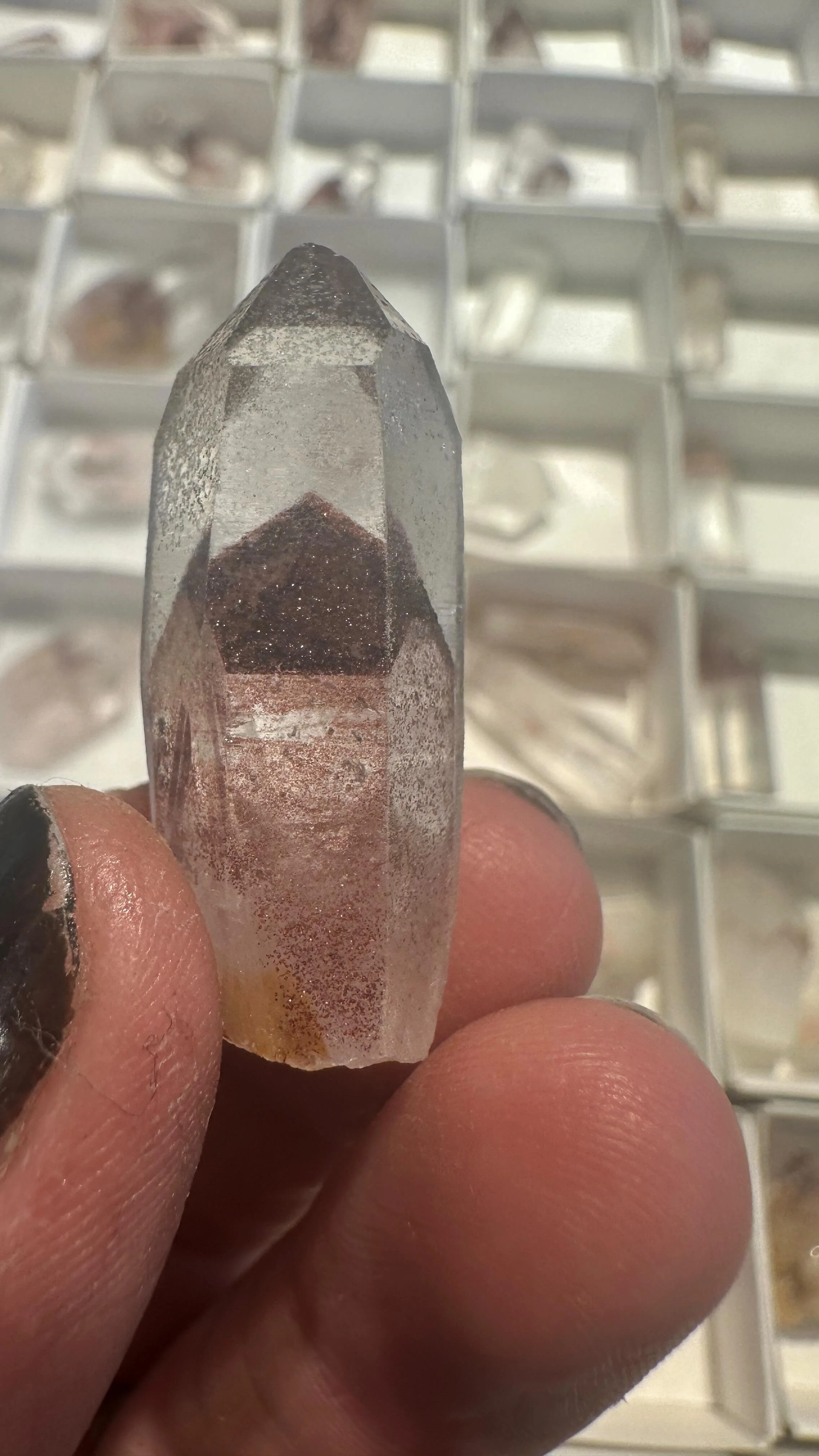
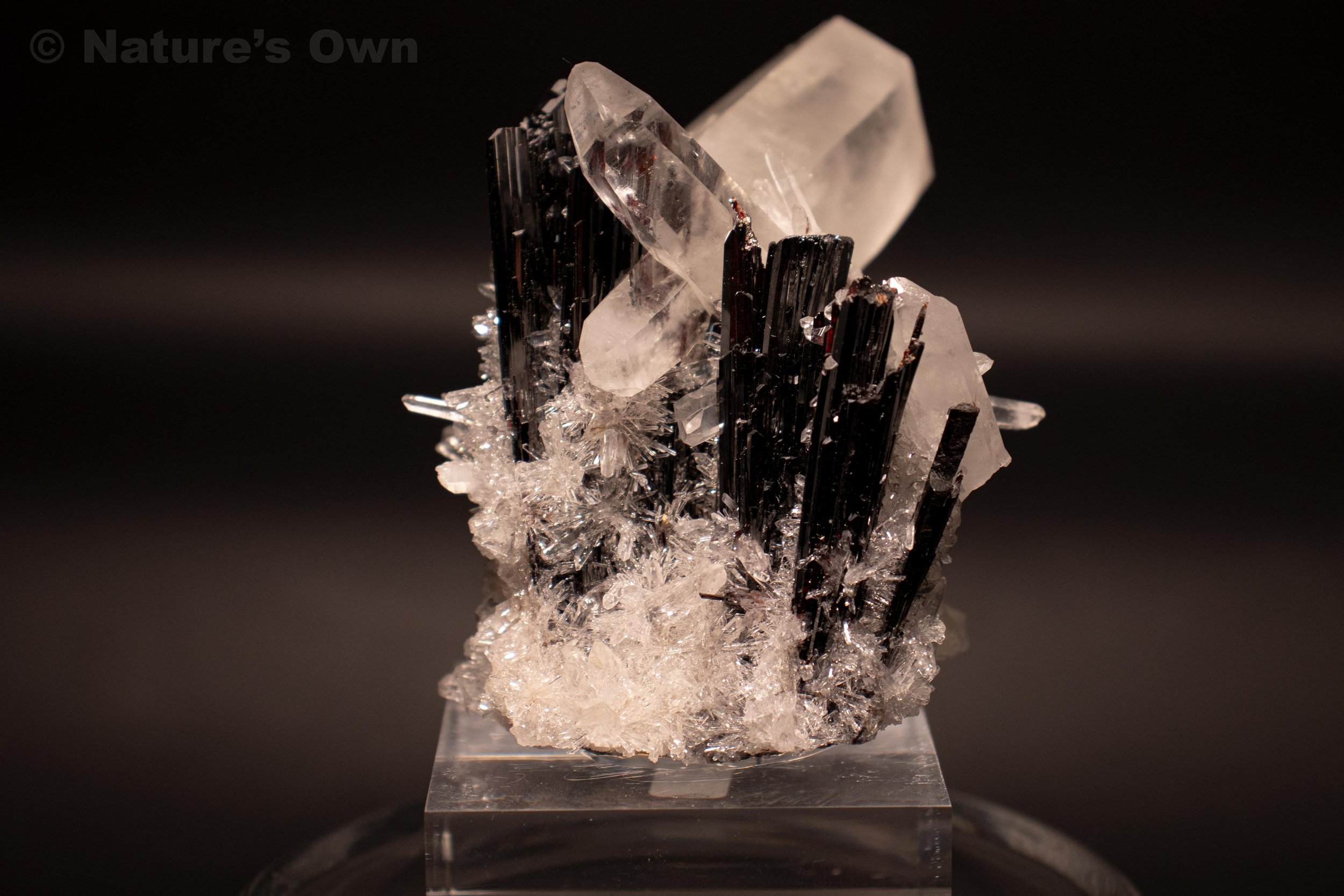
This Hübernite Quartz Cluster is an intriguing mineral formation characterized by its distinct, well-defined crystals that exhibit a unique combination of clarity and brilliance. This cluster features a striking arrangement of interlocking quartz crystals, often displaying a range of transparent to translucent hues. Encountered primarily in specific geological settings, hübernite forms through a complex geological process that involves the interplay of minerals and temperature changes over time. Collectors appreciate its aesthetic appeal and variety, making it a sought-after specimen for both educational purposes and decorative display. Each hübernite quartz cluster is unique, showcasing the natural artistry of the earth's geological processes.
Excavated from Huayllapon Mine, Pasto Beuno, Pampas District, Pallasca Province
Ancash Department, Peru.
Approx. 3” x 3” x 2”
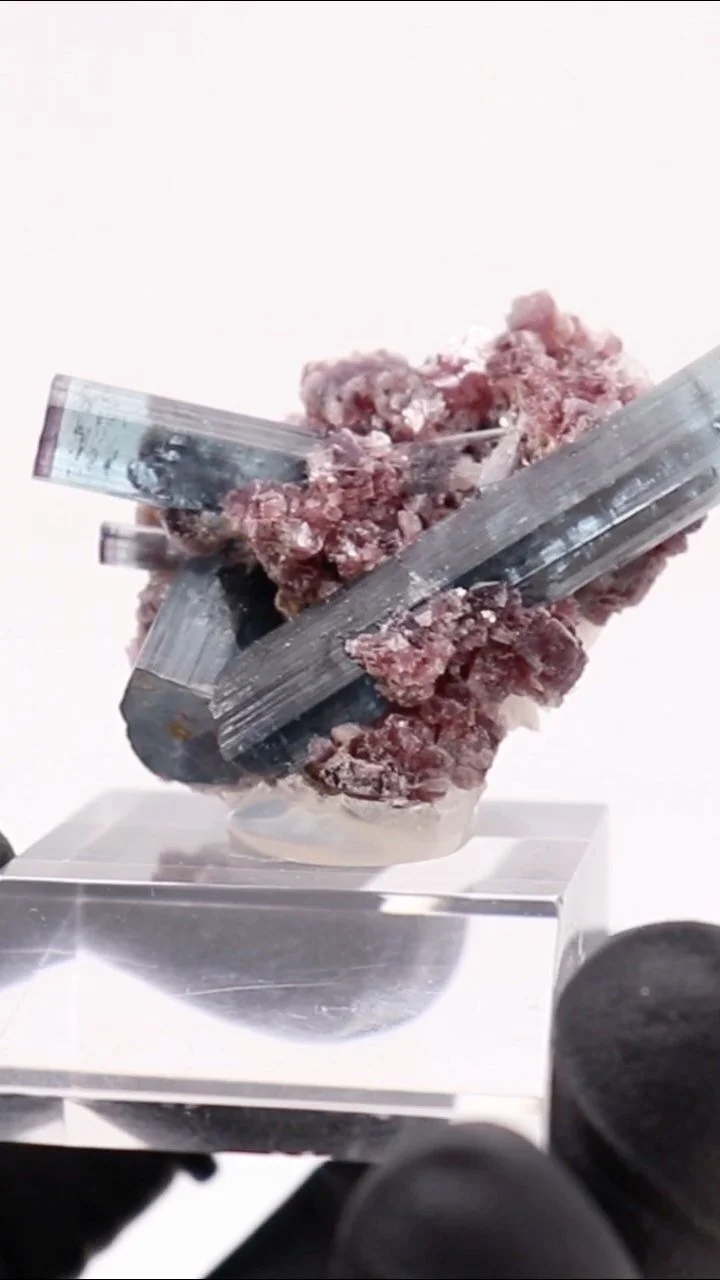
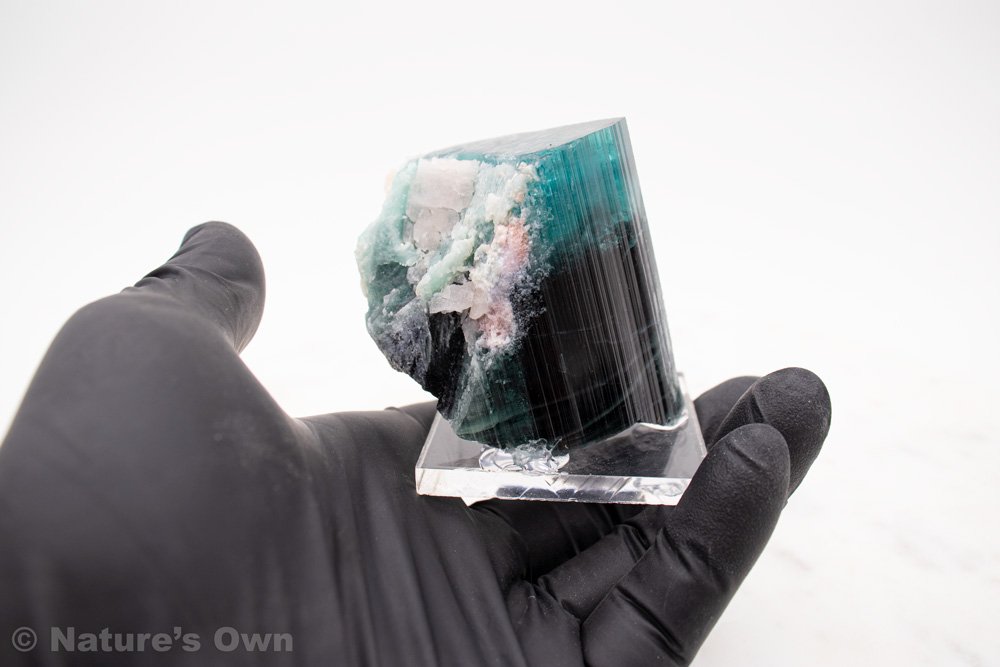
This is a large tourmaline mineral specimen, var. indicolite.
Laghman, Nuristan, Afghanistan
Size Approx. 1.5” x 2.25” x 2”
This tourmaline specimen displays excellent quality, and exceptional size. Although tourmaline comes in many different arrays and mixtures of color, blue tourmaline is by far the rarest. Although the deep blue paraiba tourmaline first discovered in brazil is the rarest of all, indicolite is also a highly sought after varietal. Most indicolite will have some greenish tones mixed in with the blue coloration, as can be seen on the back side of this mineral. However, this size and quality of the deep blue portion of this mineral make it highly desirable for the serious collector.
This specimein is Pink Paprok Tourmaline.
Paprok, Nuristan, Afshanistan
Size Approx. 2.5” x 1” x 1.5”
This product is a fossilized lobster, from Solnhofen Germany. Fossils from this formation are well known for their soft body preservation.
Size Approx. 7.75” x 9.5” x 0.5”
This is a set of five high quality carved jade playing dice.
Product sold as set only.
This product is our bulk selection of Carnelian bracelets.
These popular Carnelian bracelets make a great gift, even for yourself!
Natural Variations will occur.
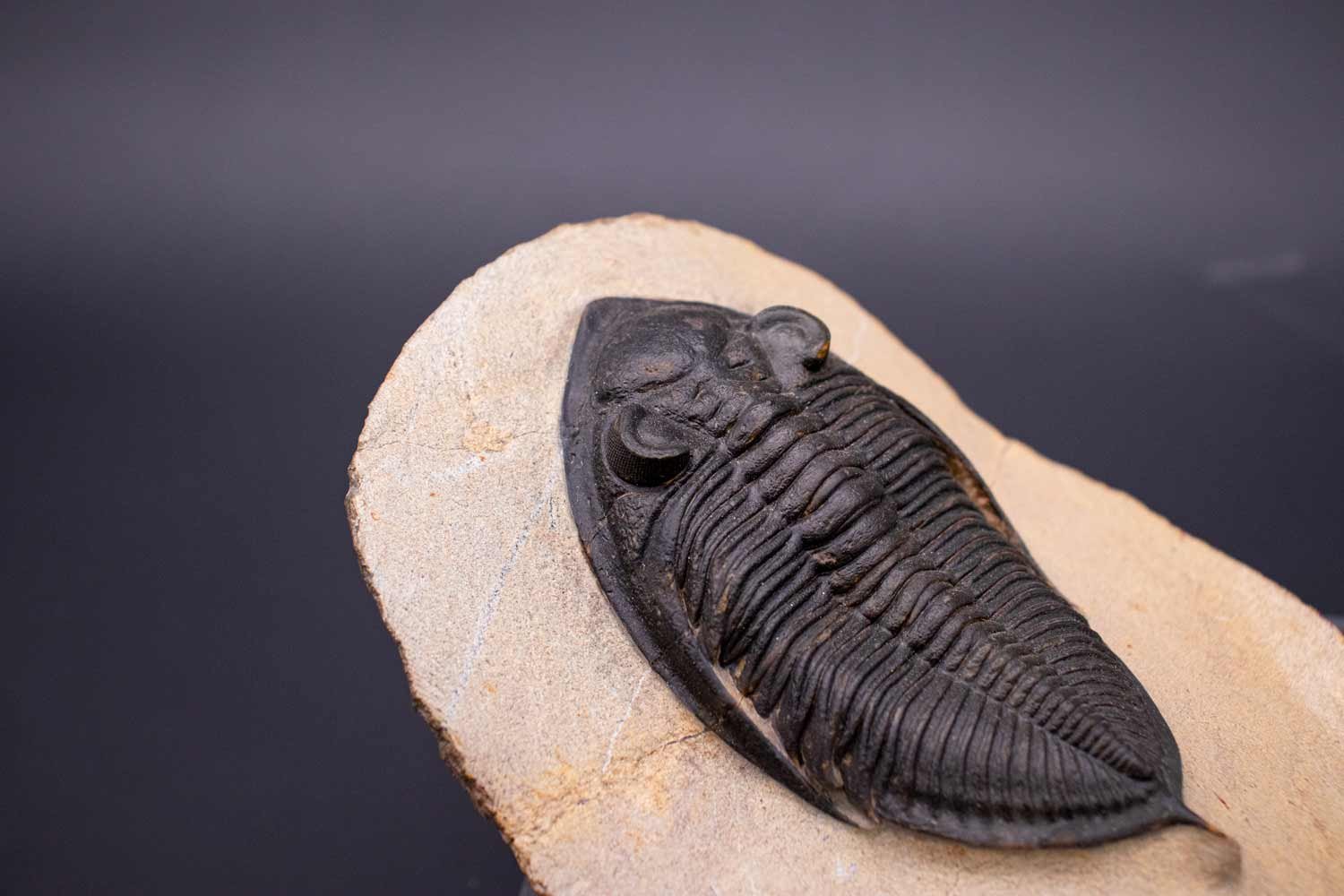
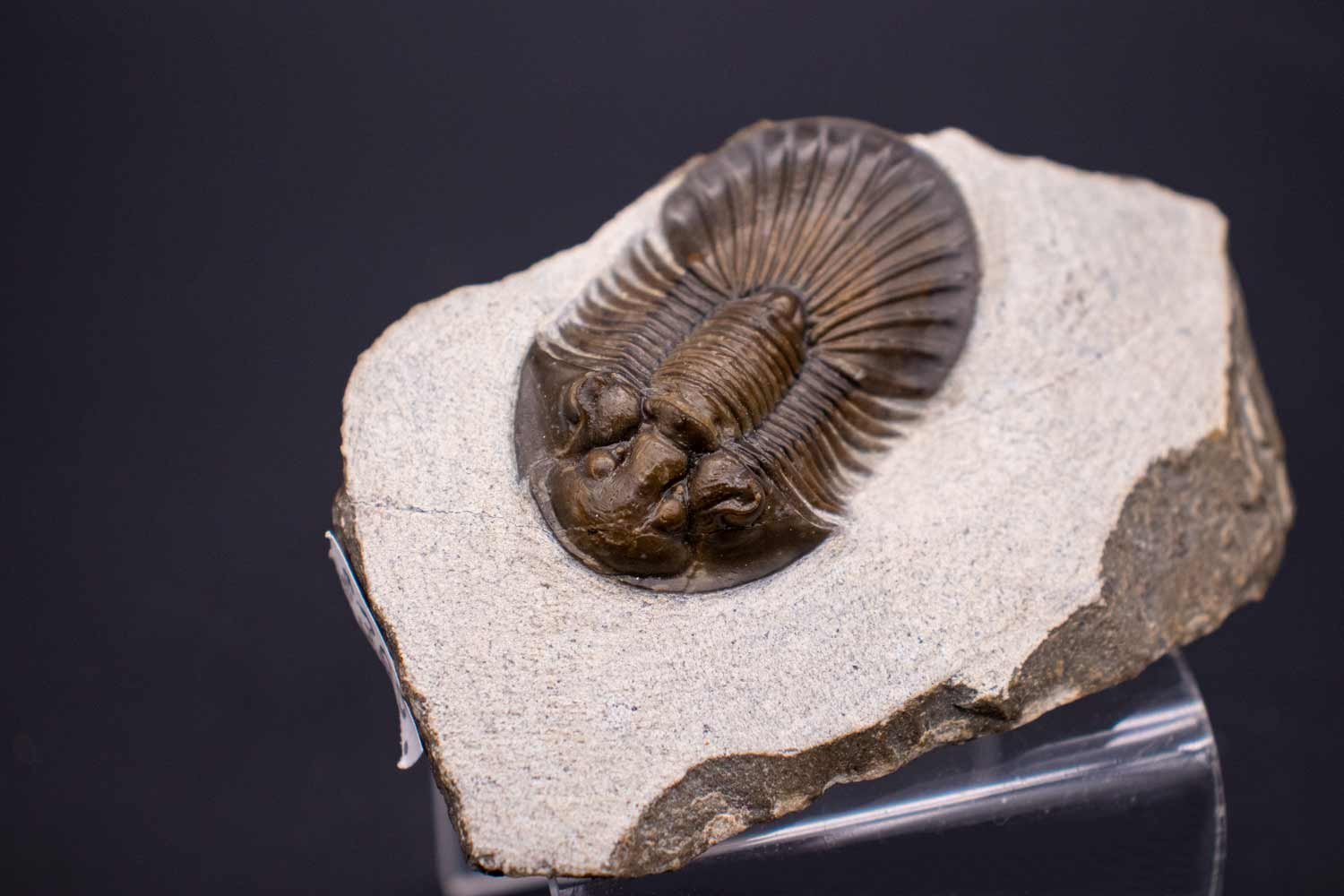
This is Moroccan fossilized Trilobite.
An iconic extinct marine arthropod, this trilobite fossil is very well preserved in Limestone. This particular fossil dates from the Devonian period, some 350-420 mya (million years ago).
Approx. 3.5” x 3.5” x 1.5”
Phacops sp.
Djebe/Issoumour, Morocco
This is a beautiful Malachite mineral specimen. Malachite is a basic copper carbonate, which has a hardness of 3.5-4.
Democratic Republic of Congo, Africa
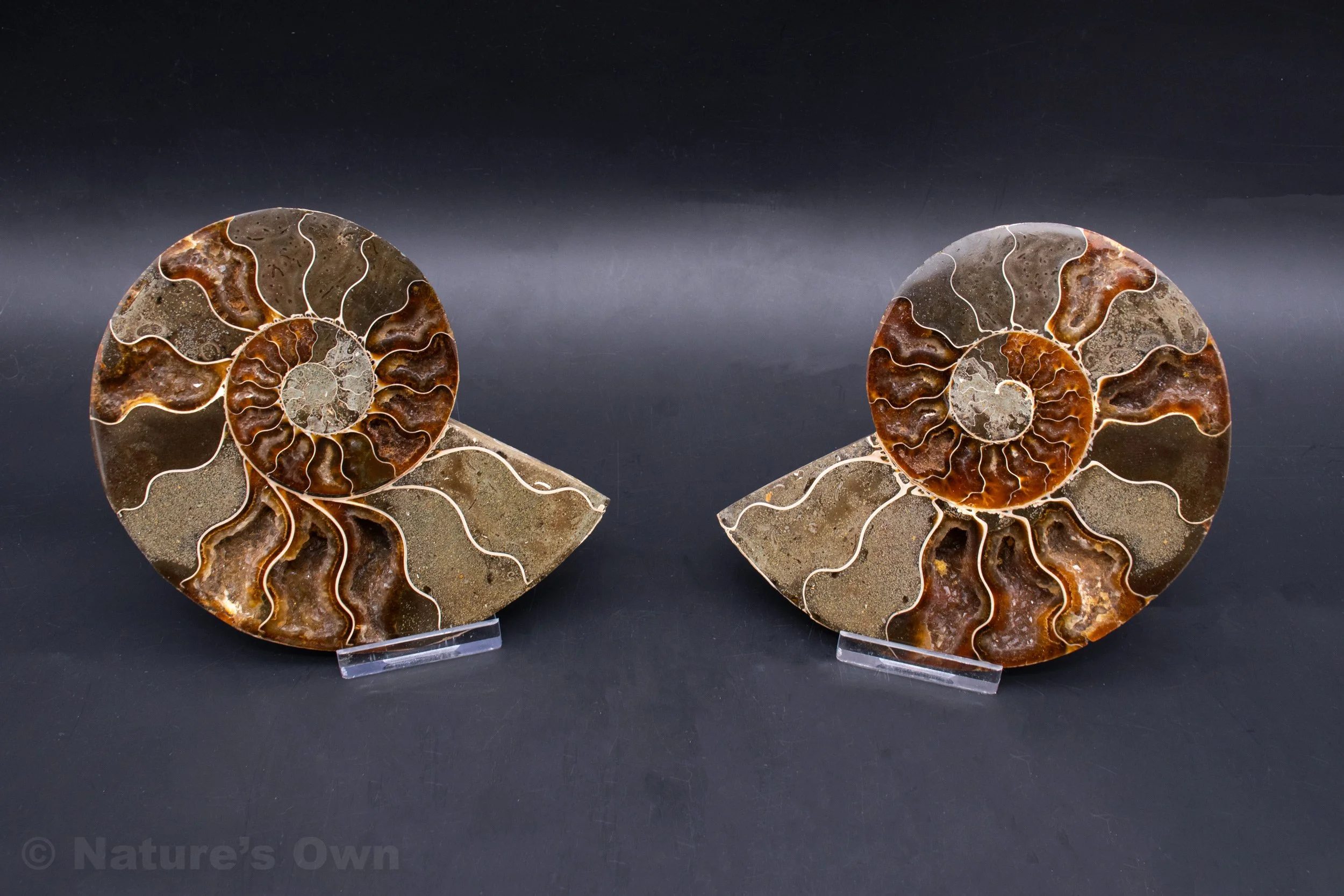
This product is a Fossilized Ammonite Specimen that has been split down the middle creating matching halves. This
Madagascar
Size Approx. 4.75” x 4” x 0.5”
Ammonite fossils are one of the most well known and recognized fossils in the world. They were a predatory marine mollusk that first appear in the fossil record about 240 million years ago. Even though they are more closely related to the octopus, squid, and cuttlefish, this cephalopods shell more closely resembled that of that Nautilus, which is still alive today.
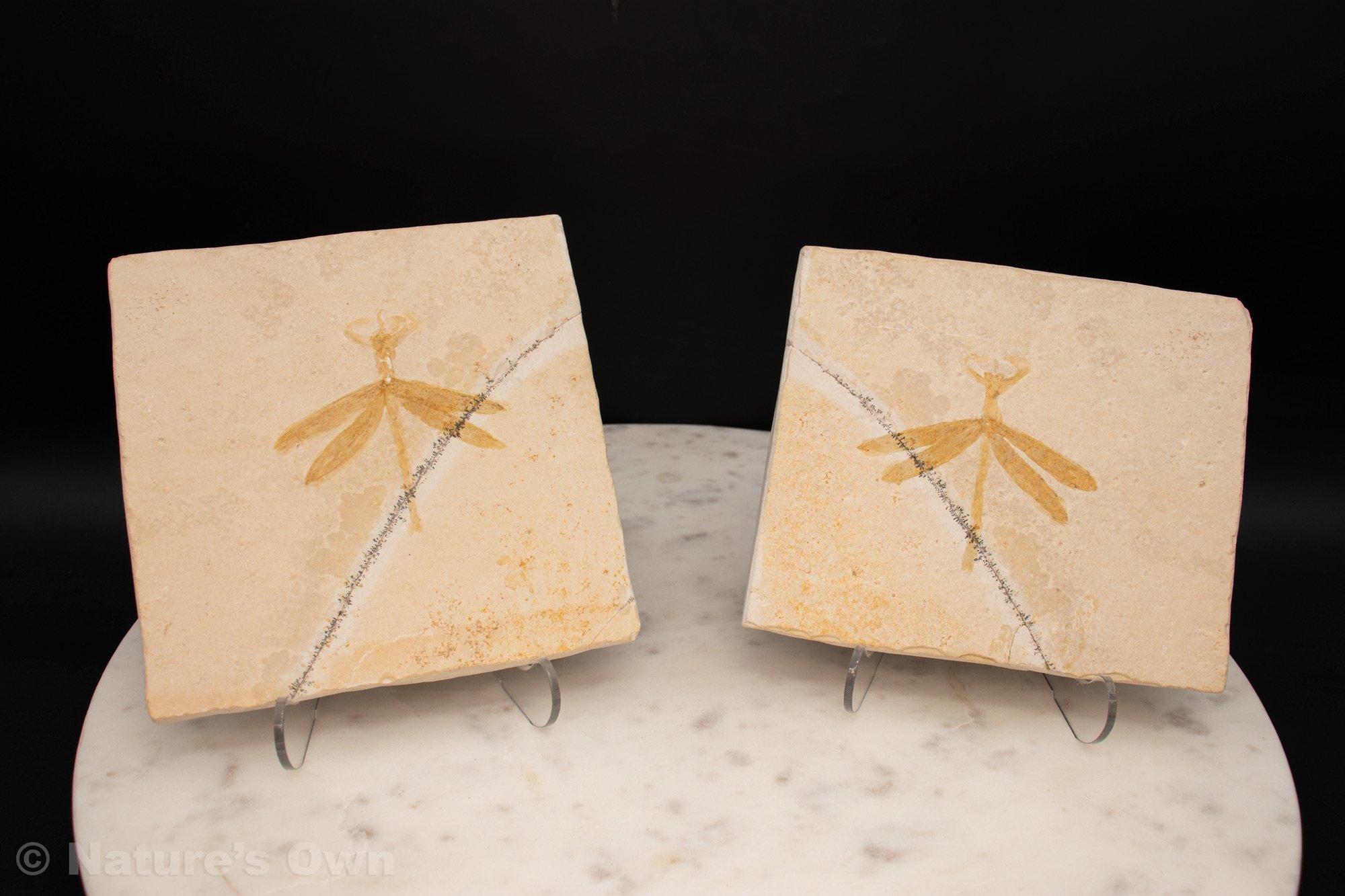
This exquisite pair of fossilized dragonfly plates showcases intricate details of ancient dragonflies, preserved in sedimentary rock. Each plate features well-defined wing structures and natural colors that provide a glimpse into the prehistoric world. Ideal for collectors and enthusiasts alike, these specimens serve as a stunning representation of the evolution of insects and the beauty of fossilization. Perfect for display, they capture the rich history of life on Earth.
Thersuphlephia eximia
Solnhofen formation, Eichstatt, Germany
Plate 1 Size Approx. 5.5” x 4.5” x 0.75”
Plate 2 Size Approx. 5.5” x 4.5” x 0.25”
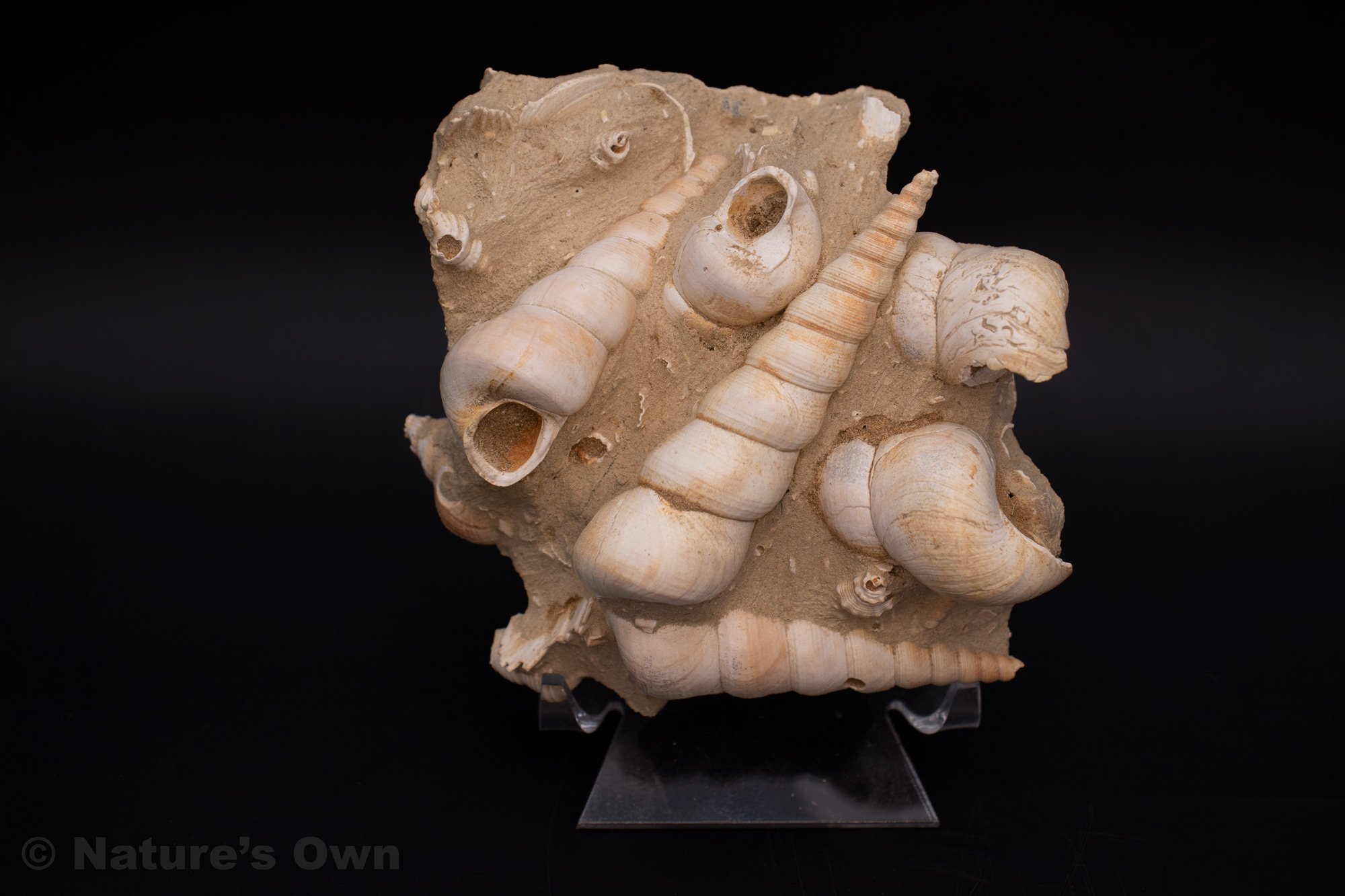
This fossilized Turitella shell cluster showcases a stunning array of naturally preserved, tightly coiled shells that are characteristic of the Turitella genus. The cluster, adhering to a matrix of compacted sediment, provides a glimpse into the ancient marine ecosystems that existed millions of years ago. The meticulous arrangement of the shells hints at their original growth patterns, while the well-preserved surfaces reveal clear markings and textures that enhance their visual appeal. Ideal for collectors and enthusiasts alike, this specimen serves as a remarkable testament to the resilience of marine life through geological time.
Tourraine, France
Miocene Epoch, Approx. 23-5 mya
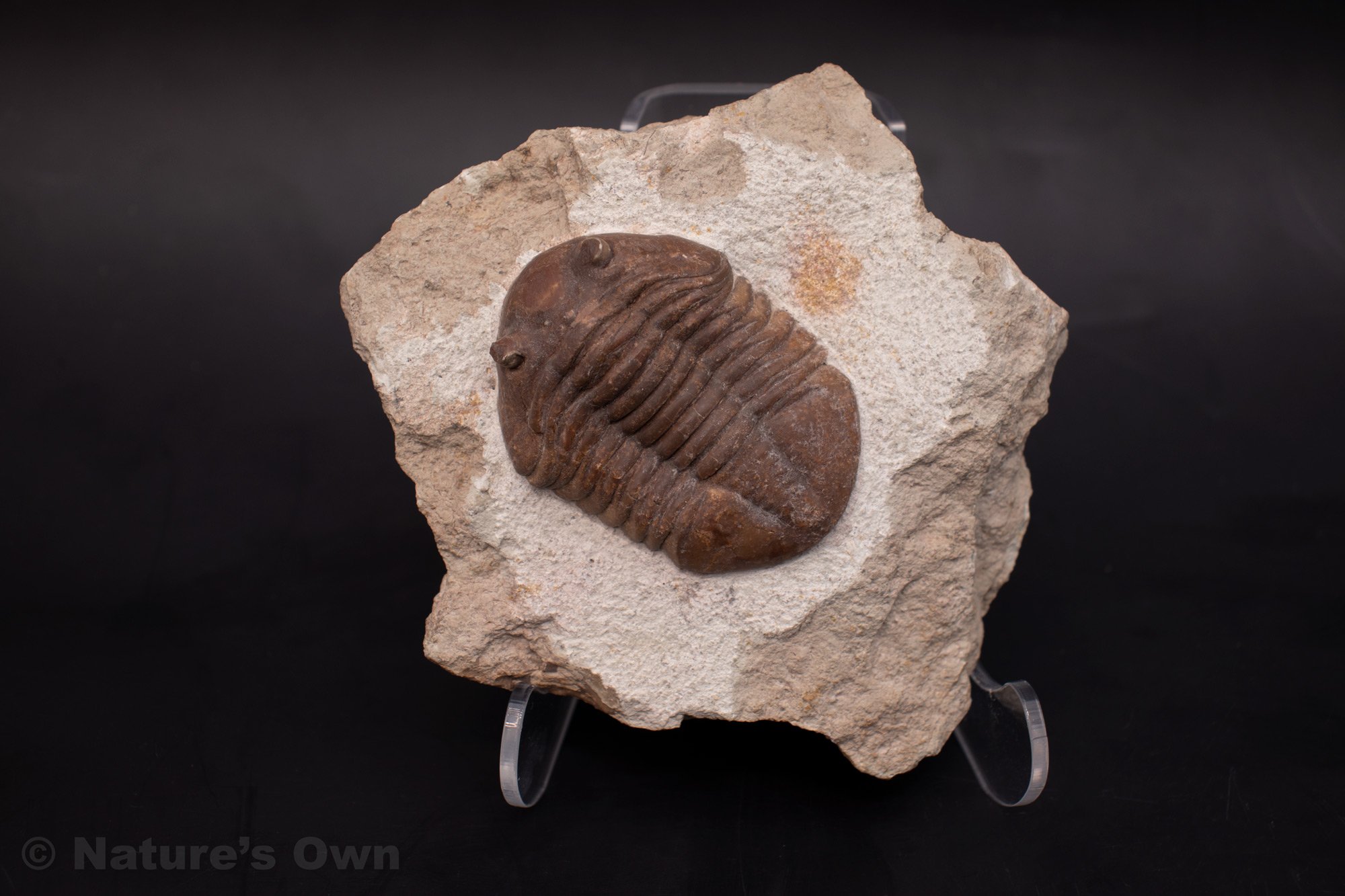
This exceptional fossilized trilobite specimen, dating back over 450 million years, showcases the intricate details of its exoskeleton. Identified as a member of the genus Phacops, it exhibits prominent compound eyes, remarkable for their size and clarity, which are well-preserved. The fossil measures approximately 4 inches in length and is embedded in a light-colored limestone matrix, enhancing the contrast and highlighting the trilobite's distinctive dorsal ridge and pleural lobes. The fine textures and striations of the carapace are visible, providing insight into the morphology and ecology of these ancient marine arthropods. This specimen serves as an excellent representation of the diversity and evolution of trilobites during the Paleozoic era, making it a valuable addition for collectors and educators alike.
Asaphus Lamanskii, M. Ordovician
Size Approx. 4.25” x 3.5” x 1.5”
Wolchow River, Russia
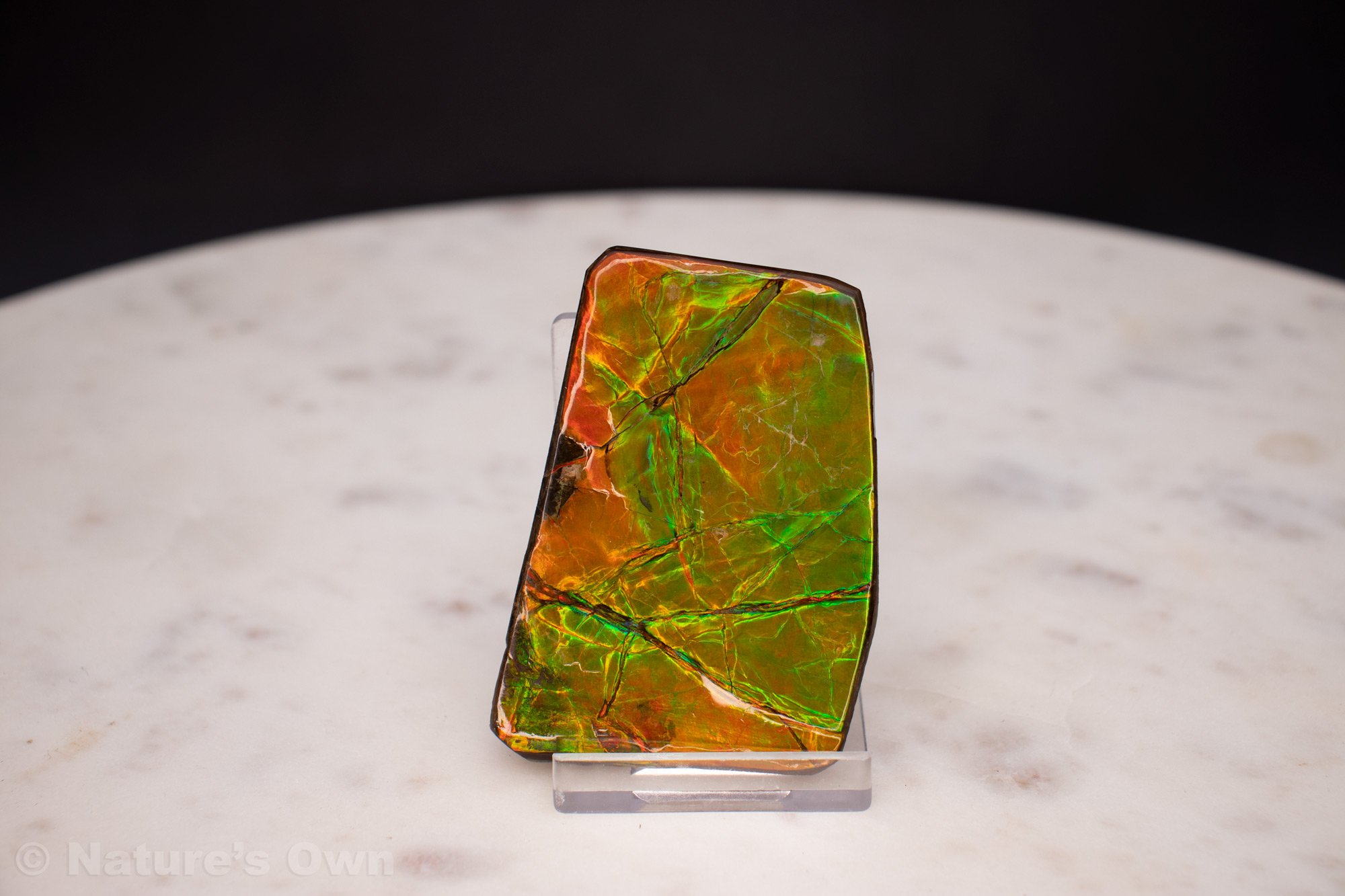
This fossilized ammolite specimen showcases vibrant iridescent colors, ranging from deep greens and rich reds to striking blues. Dating back to the Late Cretaceous period, approximately 70 million years ago, this organic gemstone is formed from the fossilized remains of ammonite shells. The unique play of light in this ammolite is a result of its layered structure, making each piece distinct. Ideal for collectors or as a stunning display item, this specimen embodies the natural beauty and intricate history of prehistoric marine life.
Size Approx. 2.5” x 1.75” x 0.25”
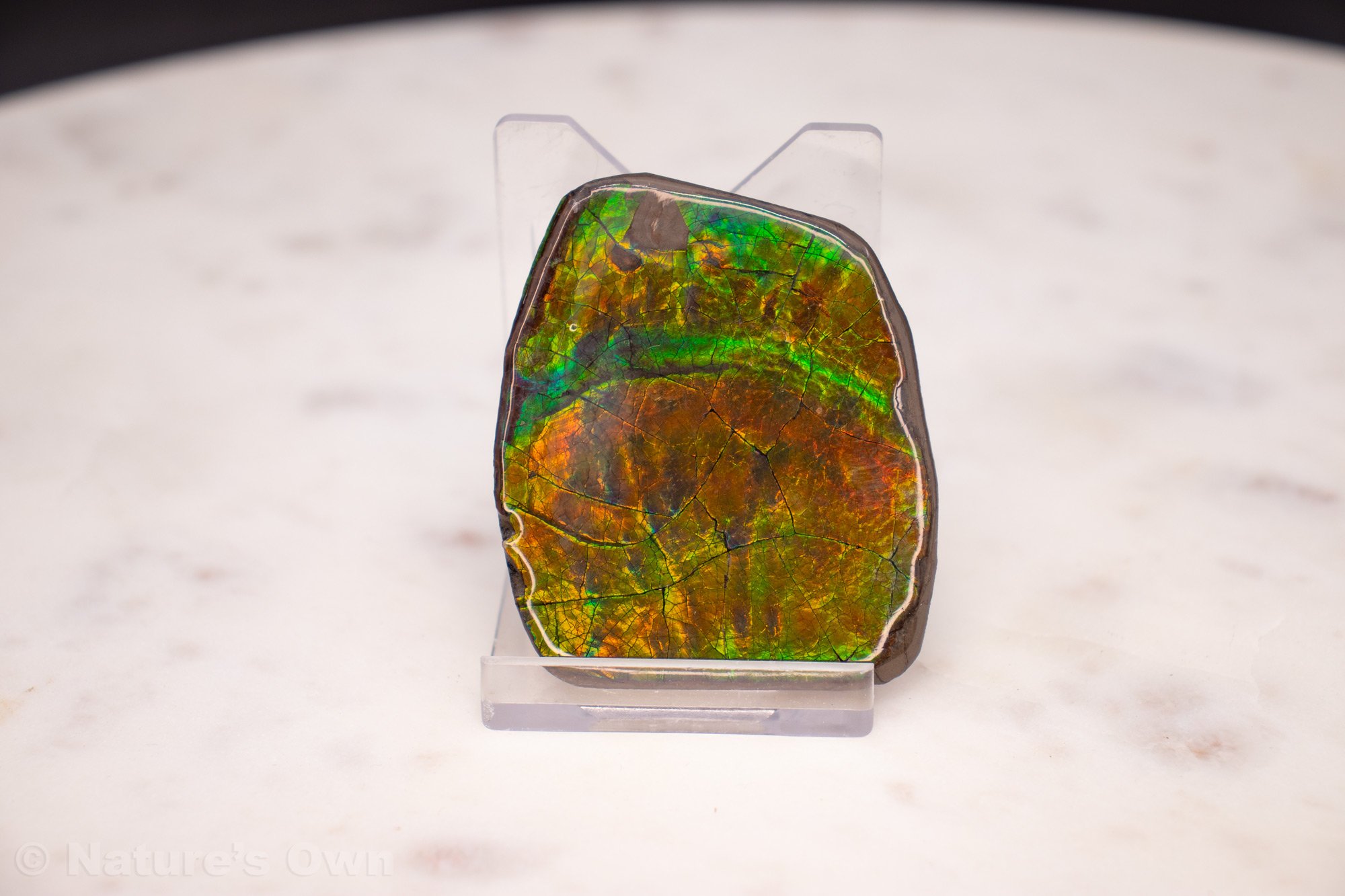
This fossilized ammolite specimen showcases vibrant iridescent colors, ranging from deep greens and rich reds to striking blues. Dating back to the Late Cretaceous period, approximately 70 million years ago, this organic gemstone is formed from the fossilized remains of ammonite shells. The unique play of light in this ammolite is a result of its layered structure, making each piece distinct. Ideal for collectors or as a stunning display item, this specimen embodies the natural beauty and intricate history of prehistoric marine life.
Size Approx. 2” x 1.75” x 0.125”
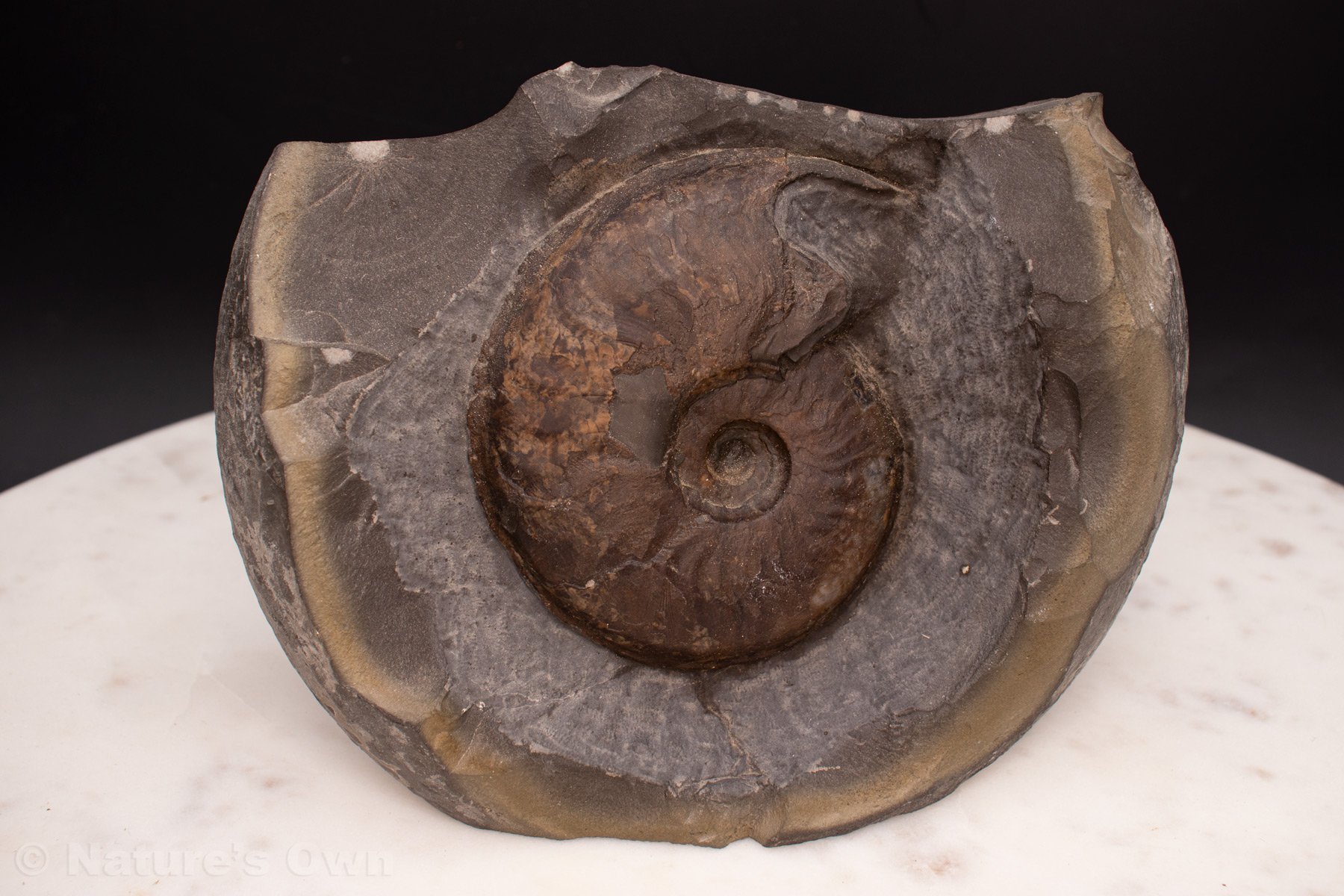
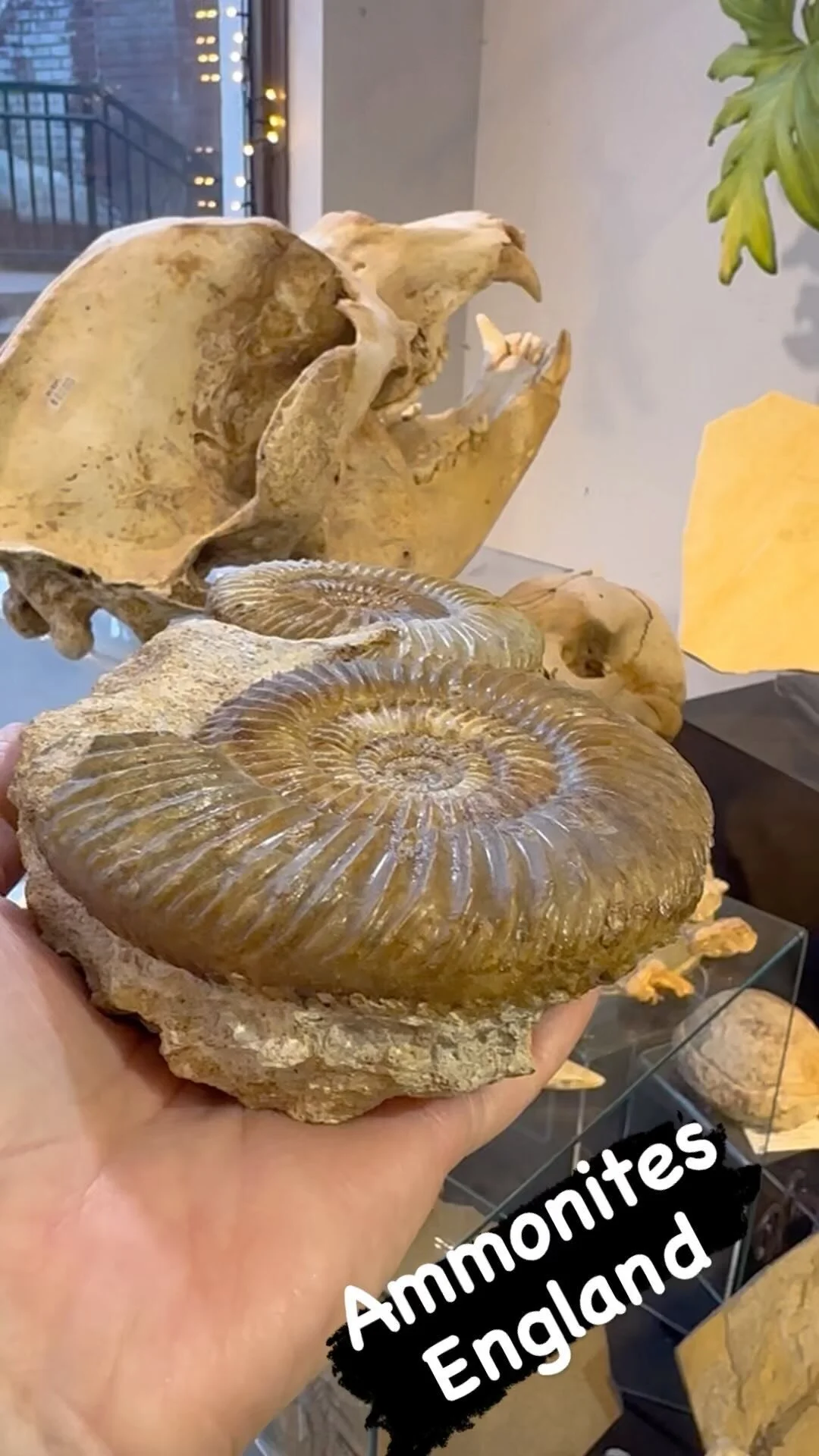
This fossilized ammonite specimen from England displays the intricate shell structure characteristic of this prehistoric cephalopod. The shell exhibits a well-preserved coiled shape, showcasing distinct growth lines and smooth whorls. Its coloration varies from earthy browns to subtle grays, indicating the mineralization process that has occurred over millions of years. Dating back to the Jurassic period, this ammonite serves as a fascinating glimpse into the marine life that once thrived in ancient oceans. Ideal for collectors and educators alike, this specimen exemplifies the natural beauty and complexity of fossilized marine organisms.
Harpoceras Falciforum
Size Approx. 4.5” x 6” x 2.25”
North Yorkshire, England
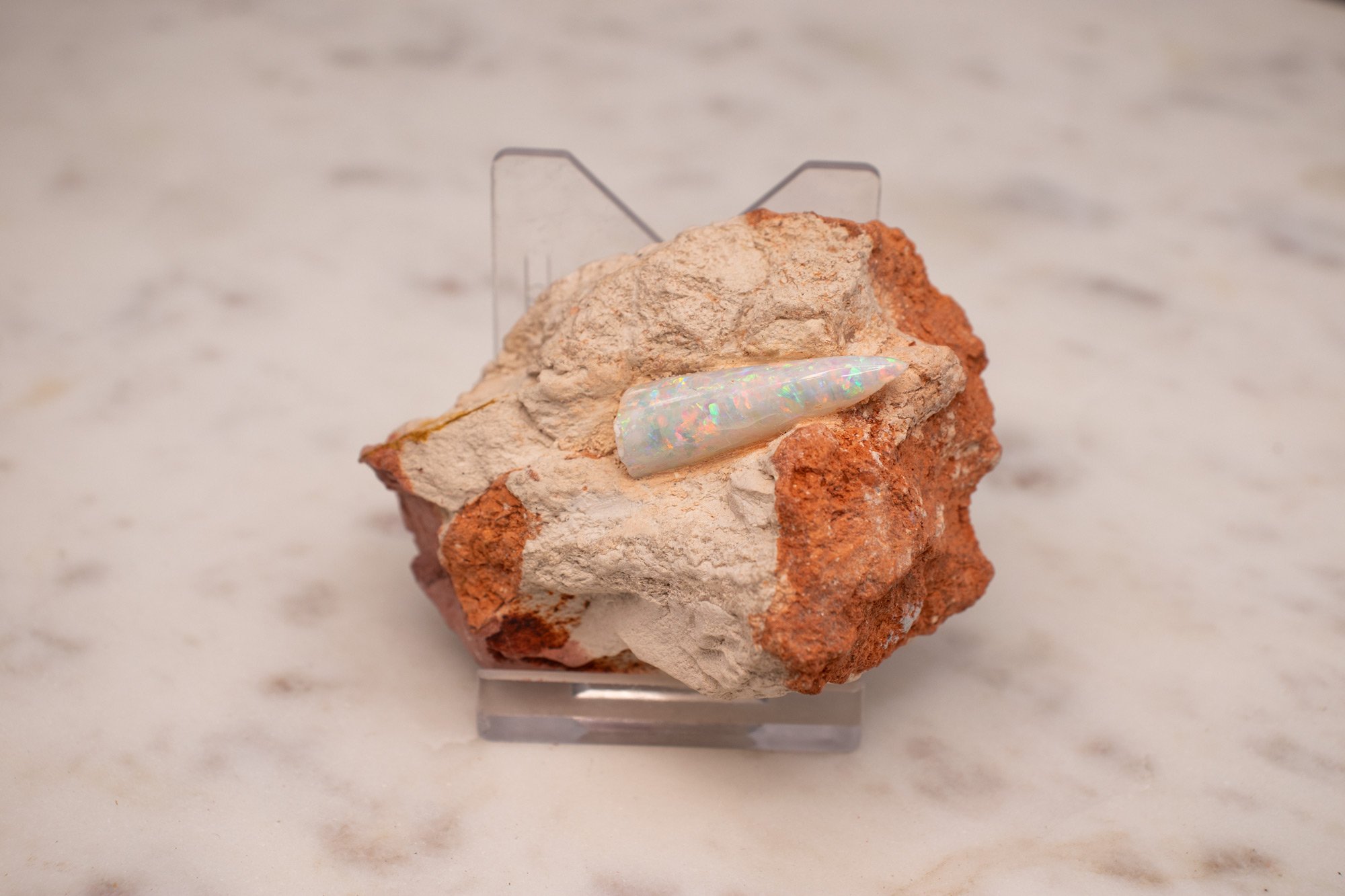
This opalized belemnite specimen, from the genus Neohibolite, showcases a striking display of iridescent colors, characteristic of opalization. The fossilized remains highlight the elongated, bullet-shaped structure typical of belemnites, reflecting the distinct morphology of these ancient, squid like cephalopods. The polished surface reveals a smooth texture, with vibrant patterns that shift under varying light conditions, making it a captivating example of fossilized marine life. The exquisite preservation of this specimen offers insight into the geological processes that led to its opalization, blending the beauty of mineral formation with the rich history of the Earth’s past ecosystems.
Coober Pedy, Australia
Size Approx. 2.5” x 2” x 1.5”
Cretaceous period, 145-66 mya
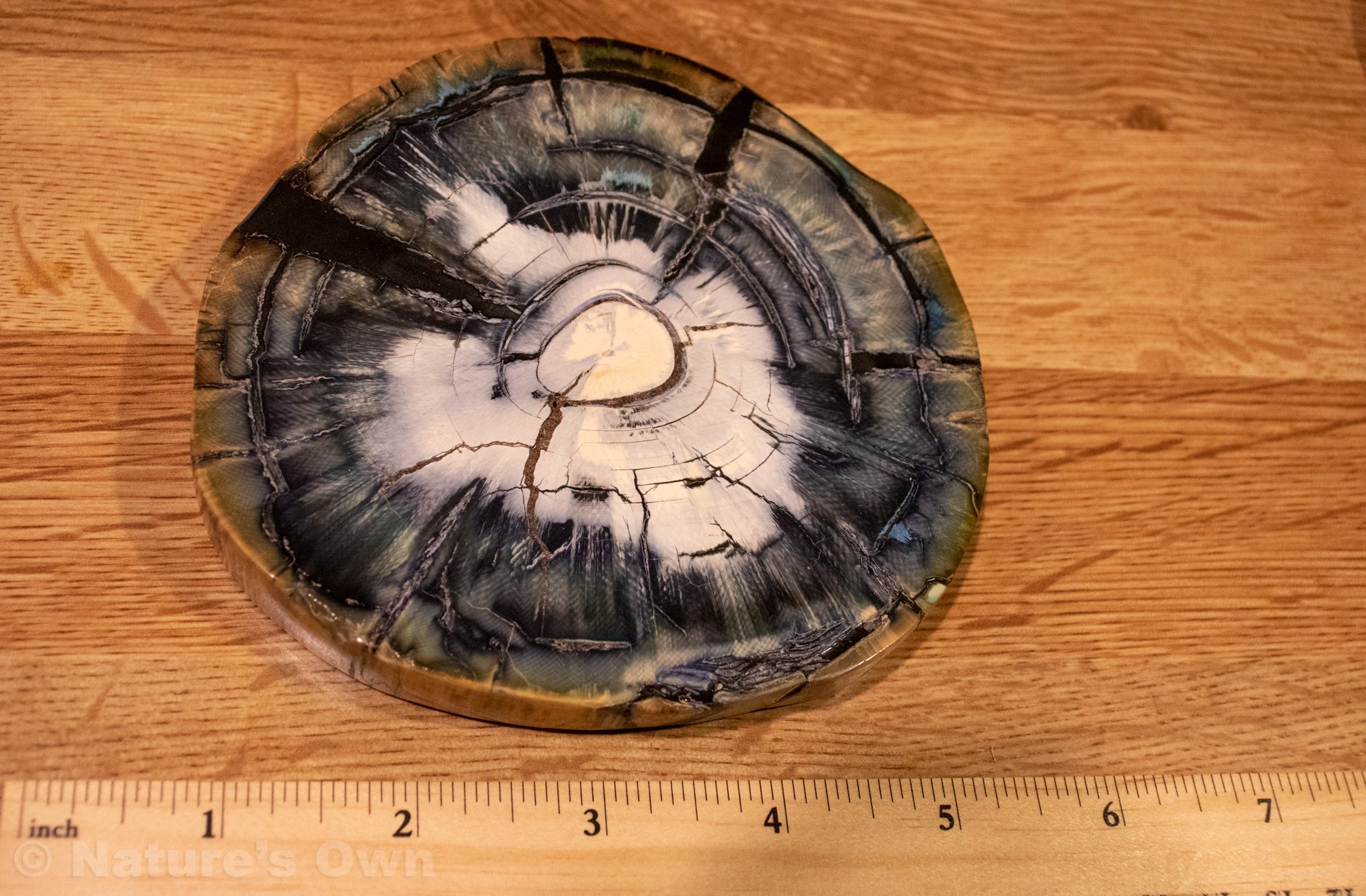
This stunning color-enhanced mammoth tusk slice, dating back to the Pleistocene age, originates from Alaska. Preserved in remarkable condition, it showcases the intricate cross-section of the tusk, featuring vibrant hues and natural striations. The slice serves as a testament to the majestic creatures that roamed the Earth during the last ice age and offers a unique glimpse into the prehistoric past. Ideal for collectors and educators alike, this piece represents both natural history and the enduring fascination with the Ice Age fauna.
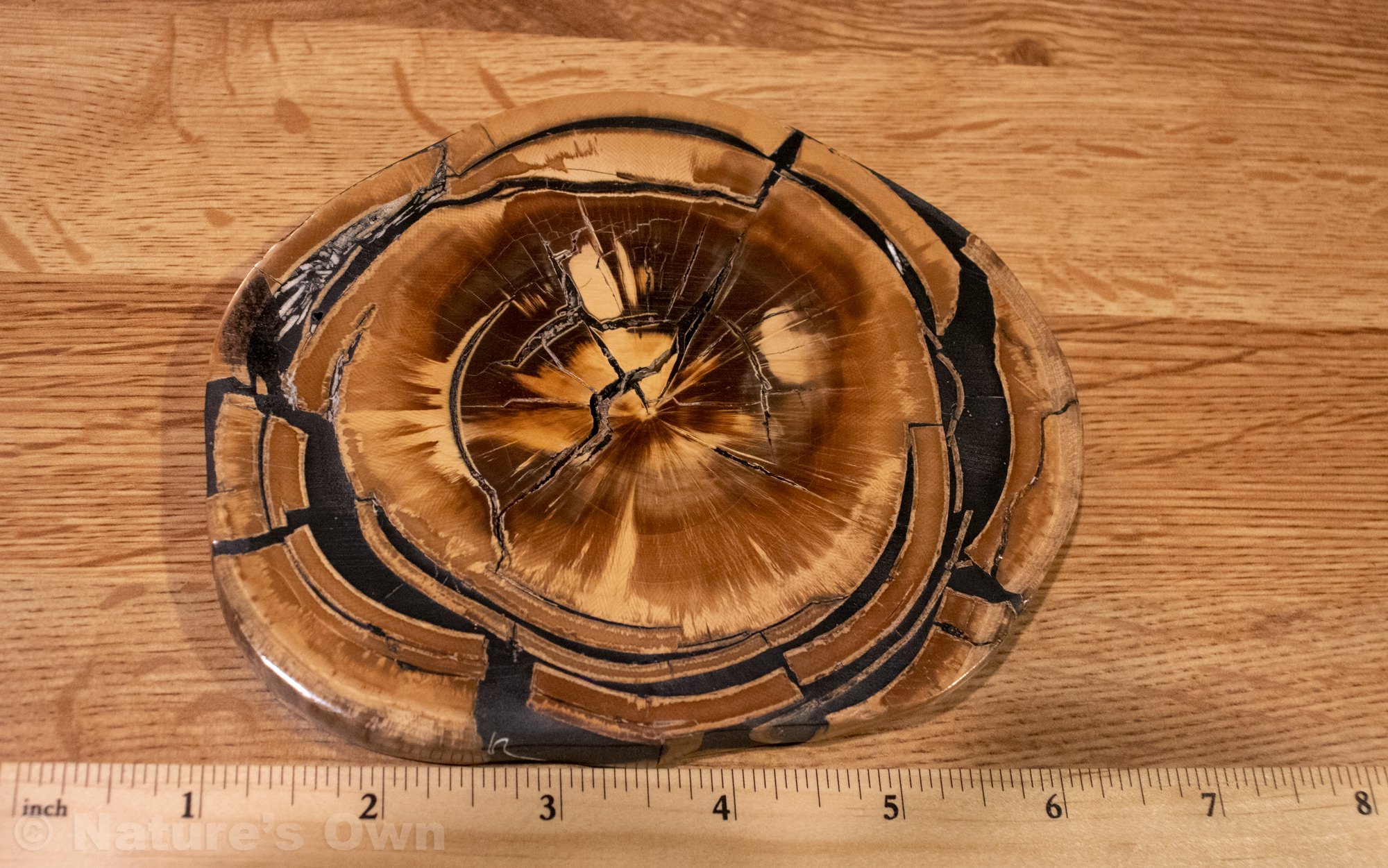
This stunning mammoth tusk slice, dating back to the Pleistocene age, originates from Alaska. Preserved in remarkable condition, it showcases the intricate cross-section of the tusk, featuring vibrant hues and natural striations. The center has a spit not filled in with the black resin.
The slice serves as a testament to the majestic creatures that roamed the Earth during the last ice age and offers a unique glimpse into the prehistoric past. Ideal for collectors and educators alike, this piece represents both natural history and the enduring fascination with the Ice Age fauna.
Shop By Category
Nature’s Own, located in Beautiful downtown Breckenridge, Colorado, is Summit County’s premiere Mineral, Fossil, and Jewelry store. Since 1988, Nature’s Own has been family owned and operated. Our world class Fossil and Mineral collection is unparalleled by conventional rock shops, and all of the unique pieces in our collection are hand selected. We pride ourselves on providing products that are priced fairly and equitably, guaranteed. Whether you are looking for books on the metaphysics of minerals, shopping for hand carved home decor, or you’re on the hunt for an epic fossil plate to go on the mantelpiece, our shop has something for you. From the young budding nature enthusiast, to world class collectors, we would love to help you find the perfect piece for your collection. Feel free to browse our online store, or stop by the shop on your next ski trip to Breckenridge, it would be our pleasure to help you!



This exquisite aquamarine with albite specimen hails from the Erongo Region of Namibia. Measuring approximately 3” x .5” x .5”, it showcases a stunning combination of translucent blue aquamarine crystals juxtaposed against white, platy albite. The delicate contrasts between the pastel blue hues and the bright white mineral create an eye-catching display. Ideal for collectors or as a decorative piece, this specimen embodies the unique geological processes of its origin, offering a glimpse into the rich mineral diversity of the region.